**Date**: Saturday, May 29, 2010 (1:00-‐5:30)
**Venue**: Kochi University, Media Library, 6th Floor
**Sponsors**: East Shikoku JALT & Matsuyama JALT
**Website**: http://esjalt.org
**JALT Members and students**: free
**One-‐Day Member Fee**: 1000 yen
**Program:**
1:00-1:10 Welcome
1:10-2:00 Keynote Lecture (6F)
Ian Isemonger (Kumamoto University, JALT Journal Editor)
In this keynote lecture, Ian Isemonger, JALT Journal Editor, discusses the state of the research trajectory in applied linguistics and the rapidly changing publishing environment in which this trajectory finds public expression. The lecture is primarily concerned with issues which pose a threat to the integrity of research in the area.
2:00-2:30 Featured Speakers (concurrent)
(6F) **Masahiro Nagasaki (Kochi University of Technology)**
**Title**: Changing EFL reading classrooms into “Reading Workshops”
Reading workshops can change students to effective and lifelong readers (Rountas and Pinnell, 2001). In reading workshops, students read because they find it fun and meaningful. However, in EFL classrooms, students read because they are required to read. Research on integrating reading workshops into EFL is being implemented and results are positive. The students read more, for joy and
with purpose.
(2F) **Harry Carley (Matsuyama University)**
**Title**: Team Teaching: The Total Team
Team teaching is most commonly understood as two instructors sharing a class. The presenter will explain how TT actually stands for the ‘total team’. Who the members are on this total team will be examined and explained. Hopefully upon completion the listener will come away with a broader understanding of their position in the classroom and how they fit on the ‘total team’.
**Concurrent presentation sessions:**
2:30-3:00
(6F) Ian Willey Checking Native Checking
(2F) Rudolf Reinelt Using Media in Rating 2nd FL Oral Examinations
3:00-3:30
(6F) Marcus Otlowski Establishing an Instructor-Learner Dialogue
(2F) David Patterson “How Sweet the Sound? Pronunciation in Performance”
3:30-4:00 **BREAK**
4:00-4:30
(6F) Brett Milliner Effective Listening Assessment
(2F) Daniel Ribble & Joanna Hare Techniques for Using Film in the Classroom
4:30-5:00
(6F) Jennie Milliner Learner Perceptions of Computer-assisted vs. Face-to-face Peer Feedback on Writing
(2F) Paul Batten & Gerardine McCrohan Testing Communicative Compensatory
Strategies
5:00-5:30
(6F) Jeremiah Mock The Insight Playshop™ Approach to Adult Learning
***********************************************************************************
5:30-6:00 Steering committee meeting: 2nd Shikoku JALT Conference (Matsuyama 2011)
6:30~ Party – Dandan Gikyo (段々桔梗)
Myanmar/Japanese fusion, 4500 yen (drinks and food included)
Additional information and map can be downloaded here: 1stShikokuJALTProgram.pdf
Author Archives: japantown

Professional development opportunities within JALT Publications
Speaker: Jerry Talandis Jr.
Title: Professional Development Opportunities Within JALT Publications
Date/Time/Place: Tuesday, March 16th, Kochi Women’s University (Meeting Room 2) 7:00-8:00 p.m
Abstract:
This presentation will focus on professional development opportunities within JALT Publications. Advice for getting published (Including submissions guidelines and editorial processes) will be provided, and benefits from becoming a volunteer staff member will be outlined.
Speaker profile:
Jerry Talandis Jr. teaches English at the Chiba campus of Toyo Gakuen University. He is currently a co-editor of JALT’s The Language Teacher. His research interests include professional development and exploring online tools for language learning.
Anatomy of a Native Check
Reply
Date and time: Saturday, Feb 20 (1:00-2:30)
Place: Kagawa University Education Faculty, Room 411
Presentation title:Anatomy of a Native Check
Abstract
Many academic journals in Japan require “native checks” for English abstracts accompanying submissions in Japanese. However, the efficacy of such native checks has not been confirmed empirically. It has even been suggested that native checks done by English teachers on texts produced by scientists may be superficial at best, and harmful at worst, particularly in terms of lexical cohsion. The presenters, an English teacher and a Nursing instructor, will describe an ongoing study that centers on the nature and efficacy of native checks. Ten native English speakers were asked to edit an abstract produced by a Japanese nursing researcher, and the changes made were identified and categorized from a socio-cognitive perspective. Follow-up interviews were then conducted. Results reveal a variety of approaches and attitudes towards editing, suggesting that a simple native check is in fact a complicated phenomenon yielding diverse results.
Presenters
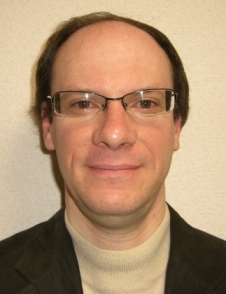
Ian Willey, Center for Research and Educational Development in Higher Education, Kagawa University
Willey teaches English as an assistant professor at Kagawa University and is a doctoral candidate at Hiroshima City University, focusing on second language writing.

Kimie Tanimoto, School of Nursing, Kagawa University
Tanimoto is an associate professor and pediatrics nursing instructor at Kagawa University. She is also a doctoral student in the Graduate School of Medicine at Kagawa University.
East Shikoku JALT event on technologies in education
Event Date: Sunday, Jan. 24, 2010
Time: 13:00 – 15:00
Location: Kochi University of Technology, Tosayamada, Kochi, Japan
(3rd floor of K-building, located on the east side of campus, near the student cafeteria)
Map: https://esjalt.org/eastshikoku/archives/2010/01/east_shikoku_ja_4.html#more
Event Description
This event will feature a number of educational technology professionals from the Shikoku region and will include both hands-on workshops and digital poster sessions.
Workshop titles and poster sessions
1:00-1:40: Workshop 1: Multimedia content creation tools for language teaching
Presenter: Paul Daniels
Abstract: An important component of language learning is visual and audio input, particularly at limited language proficiency levels. Multimedia can greatly enhance learner understanding of the language content. This practical workshop will introduce basic tools that can be used to create and deliver images, audio and video for language instruction. The following topics will be covered in this workshop. Depending on the number and level of computer proficiency of the participants, this workshop may be divided into two groups.
• Recording and embedding media into online content.
• Adding multimedia to online quizzes and language practice activities
• Using PowerPoint as an content creation tool rather than a presentation tool
• Creating instructional content with Camtasia Studio
• Web-based multimedia media creation & delivery tools
1:40-2:20 Workshop 2: Introducing Low Intermediate Students to Collocations using Google Search
Presenter: Professor Trudie Heiman, Tokushima Bunri University
Abstract: This workshop will demonstrate how to use Google Search to introduce Low Intermediate Level learners to Collocations. Understanding and using collocations can significantly improve students writing and help move the L2 learner toward more native- like fluency. A brief introduction to collocations and detailed demonstrations on how to introduce collocations will be given. Before and after samples of student work will be provided to illustrate how understanding collocations improve their ability to use words correctly and appropriately.
2:20-3:00 Poster sessions
Poster 1: The Lexical Portfolio
Presenter: Professor Trudie Heiman, Tokushima Bunri University
Poster 2: Applying Moodle’s Survey and Quiz Functions to the Classroom
Presenter: Andrew Oberg
Poster 3: Can the listening experience be enhanced through use of visual referencing?
Presenter: Michael Sharpe
Poster 4: Designing iPhone or iTouch apps for language instruction
Presenter: Paul Daniels
Poster 5: Ideas and Resources for English Teachers Using iPod Touch
Presenter: David Grant
Presentation: The Insight Playshop TM Approach to Learning
Speaker: Jeremiah Mock

Date/time/place: Saturday November 14th, Kochi University, Building 3, Room 310 (2:00 – 4:00 p.m.)
Abstract:
Intuitively, most people appreciate the close kinship that play and learning share. The process of play can lead to deep insights about everyday life, culture, language, values, relationships, nature, physics, metaphysics and so on. Fun-filled learning experiences lead to the enrichment and flourishing of all involved. Research and experience show that adult learners, like the children they once were, learn best when learning-facilitators stimulate their curiosity, imagination and creativity. Unfortunately, the modern Fordist model of education that has proliferated around the world emphasizes arduous “work” and test taking as the way to be educated. Such didactic authoritarian education conditions students to be deferential, passive and “switched off,” thus making it difficult for them to find their voice to express themselves in classroom settings. Even the metaphorical notion of a “workshop” (i.e., an informal, “hands-on” group learning setting) focuses on “work” (as in production manufacturing) rather than emphasizing curiosity, imagination and creativity.
The Insight PlayshopTM approach to learning, including language learning, emphasizes creating a fun environment that sparks the curiosity, imagination and creativity of learners (i.e., course participants and learning-facilitators alike) for the purposes of generating insights about a topic and stimulating greater ability to communicate. This participatory seminar will invite participants to dialogue about “traditional” education, understand the rationale for the Insight Playshop approach and methods, and engage in some experiential playshop learning experiences. Come ready to have fun!
Speaker profile:
Jeremiah Mock, MSc, PhD, is a health anthropologist and education enthusiast. Currently, he is a Fulbright Scholar conducting comparative research on the culture of alternative living in Kochi Prefecture and Central Thailand. He is Clinical Professor at Kochi Women’s University Faculty of Nursing, and Visiting Associate Professor at Osaka University Center for the Study of Communication-Design. While faculty at the University of California, San Francisco, he led many intensive training courses and seminars on participatory learning in San Francisco and across Asia.
Practical Classroom Applications for Authentic Listening Materials

Speaker: Darren Lingley
Venue: Kagawa University (Takamatsu) Faculty of Education, Room 411
Date & Time: October 3, 2009, 1:00-2:30 pm.
Recent work on listening has attempted to shift the emphasis to alternative approaches which place more focus on the learner perspective, with instructional procedures focused on what goes on during the process of listening. We can then diagnose a specific area in need of more explicit teaching attention. This presentation will suggest practical ways to use authentic spoken texts for teaching listening. A range of visually supported authentic materials will be presented including brief streams of natural English provided by well-known actors in response to interview questions and selected dialogues from television sitcoms. After providing a brief rationale for using authentic materials, the presentation will highlight the need for increased focus on the bottom-up processing of language required for effective listening. The presentation will describe how the listening materials are used to help learners deal with the many problematic features of natural spoken language. Participants will be asked to do short transcriptions as a way of highlighting particularly difficult features of spoken language.
Speaker profile:
Darren Lingley teaches Intercultural Communication, Comparative Culture and ELT in the Department of International Studies at Kochi University. He is presently involved in developing methods/materials for using authentic mediated spoken texts in the EFL classroom. Darren is Associate Editor of JALT Journal and President of East Shikoku JALT. He is an active presenter and contributor to various academic organizations in Japan and abroad.
Presentation: A Screening of the Documentary Film ‘Obachan’s Garden’

Speaker: Linda Ohama, Japanese-Canadian film director
Date/Time/Place: 19th September, 7:00, LL room Women’s University
Linda Ohama will screen and lead a discussion about her highly regarded documentary film, Obachan’s Garden. The film is a very moving and personal reflection, recounting the life of Murakami-san (Obaachan) who was one of more than 6,000 Japanese women who arrived on Canada’s shores between 1908 and 1924 as picture brides. Ohama personalizes the film experience to the fullest by opening the floor to a Q&A following the screening.
Speaker profile:
Linda resides in Vancouver, Canada and continues to produce films, write, paint, design gardens, enjoy her family and explore her deep connection to Japan. She currently sits as a board member with Chibi Taiko Society, Vancouver and the Canadian Independent Film and Video Fund in Ottawa, after recently sitting on the British Columbia Arts Council Board.
Hands-on Workshop: Excel for EFL teachers
Speaker: Dr. Takahiro Ioroi, Kochi Women’s University
Date: May 23
Venue: Kochi Women’s University – Language Lab
Time: 3:00-5:00 p.m.

This workshop is intended for language teachers who want to familiarize themselves with Excel, a spreadsheet software package, at the beginner level. The presenter will start with a simple presentation of some very basic features of Excel as an alternative to word processing software. Participants will learn how to make settings for creating and printing documents containing a number of columns or complex tables. In the latter half of the session some useful functions and formulas will be introduced for dealing with numeric data such as students’ scores on assessments and/or examinations, and we will touch on some simple calculations and graph drawing.
Speaker Bio
Dr. Takahiro Ioroi is a Professor in the Department of Cultural Studies at Kochi Women’s University. He started his teaching career at a high school in 1986 and joined the faculty at KWU in 1994. His research activities include the theoretical study of English phonology and morphology, and more recently he has focused on the acquisition of the English word stress system by Japanese EFL learners. His interests also extend to the use of information technology in language study (Corpus Linguistics) and education (CALL). Professor Ioroi teaches EFL, English linguistics/phonetics, and teacher-training courses. He serves as Publicity Chair for East Shikoku JALT.
Click the ‘continue reading’ link below for a map of the workshop location.
Speaker: Eva Bernat, University of New South Wales, Australia
Date/Time/Place: Monday, April 13th, 7:00 – 8:00 p.m. (Kochi Women’s University, Meeting Room, 2nd floor)

Implementing the Teaching-Learning Cycle effectively.
This seminar will provide teachers with a principled and theoretically motivated support for the development of teaching writing skills, using the Teaching-Learning Cycle (Hammond, Burns, Joyce, Brosnan, Gerot, 1992). The Teaching-Learning Cycle is based on the notion of scaffolding, which draws from Vygotsky’s (1978) view that higher thinking processes, including language, arise as a consequence of human interaction. Grounded in this social perspective, the seminar will outline in practical terms how this Cycle can be used effectively in the classroom with students of all levels of English language proficiency and teaching contexts.
Profile
Dr Eva Bernat is an Australian Learning and Teaching Council Research Fellow at Macquarie University, Sydney, and a Lecturer in TESOL at the University of New South Wales. Her research interests and publications cover metacognitive and affective learner contributions to language learning, and teacher education and development – particularly issues related to non-native speaker teachers.
Resistance, identity and imagined communities amongst Japanese EFL students
Speaker: Keiko Sakui and Neil Cowie
Research on student motivation often assumes that students are either motivated or not motivated; but this can cover up complex and evolving reasons for student behaviour. The two presenters critically examine their students’ classroom behaviour from alternative perspectives to motivation including resistance, identity and imagined communities. Key patterns of student behaviour, the influence of social and cultural factors in explaining them, and implications for teaching and teacher development are outlined.
Keiko Sakui is Associate Professor at Kobe Shoin Women’s University, Japan. She teaches EFL classes as well as teacher education courses, and is Director of the Foreign Language Education Centre. She has several publications in journals such as System, ELT Journal, and JALT Journal. Her most recent publication is on student resistance in Japanese universities in Narratives of learning and teaching EFL (2008) published by Palgrave Macmillan. Her research interests are teacher and learner beliefs, classroom management, and critical pedagogy.
Neil Cowie has been an English teacher in the Foreign Language Education Centre of Okayama University in Japan since 2004. Prior to that he taught in various universities, language schools and businesses in Japan and the UK. He has a Doctorate in Education from Exeter University and a Master’s Degree in Teaching English for Specific Purposes from Aston University, UK. His research interests include collaborative teacher development, student resistance, and exploring the connections between emotion and language learning and teaching.
Date and Time: Saturday, 14 February 2009 3:00pm – 4:00pm
Location: Kochi University, Room 136
Fee for JALT members: Free
Fee for one-day members: 500 yen
 East Shikoku JALT Chapter