Video of Alan Maley’s talk.
Title: Where do New Ideas Come From?
Date/Time/Place: Wednesday, Nov. 24th, Kochi Women’s University, Eikokuji Campus, Meeting Room 1 (1st floor – 5 meters from the main entrance) Time: 6:30-8:00
Abstract:
In my 40 years in ELT, I cannot recall a time when ‘new ideas’ was not on the agenda! I shall suggest five possible sources for such new ideas. I shall also suggest that this search, though it may ultimately lead to dead ends, has an important motivational and developmental function for teachers and trainers. Along the way, I shall suggest how some of these sources might be linked to Action Research projects. The five sources are:
1. Teacher Interaction: Here I shall explore the various kinds of interaction which often produces innovative ideas – ranging from formal training contexts, through semi-formal professional contexts such as conferences, to informal exchanges in staff rooms.
2. Heuristics: By heuristics, I refer to basically simple ‘rules of thumb’, which, when applied inevitably change the teaching interaction. I will deal in some detail with John Fanselow’s ‘do the opposite’ (Fanselow, 1978). I shall also point out the heuristic basis of the ‘designer methods’ (Suggestopoedia, etc.). Other heuristics, such as ‘withhold information’ will also be mentioned.
3. Re-explorations of Traditional Techniques: Here I describe some areas which have been renovated by creative thinking; dictation, homework, vocabulary, reading and grammar, and suggest some others ripe for re-development, such as repetition, questions, dialogues, drills and translation.
4. Borrowing from Feeder Fields: These fields will include NLP, Multiple Intelligences, Music, and Art. I shall suggest that there are potential benefits to be had from considering areas such as Neuro-science, the psychology of Consciousness, and Creativity theory itself.
5. New Developing Areas: The most obvious (with certain caveats) is Information Technology. I shall also refer to Literature, Global Issues and CliL as content-related areas, and to Young Learners and Advanced Learners as areas for development. Recent renewed interest in ‘Flow’ (Czikszentimihalyi, 1990) will also be included.
Speaker Profile:
From 1962-1988, Alan Maley worked for the British Council in Jugoslavia, Ghana, Italy, France, China and India. He was Director-General of the Bell Educational Trust in Cambridge from 1988-1993 and then worked as Senior Fellow at NUS, Singapore until 1988. From 1999-2003 he set up and ran the graduate programme in ELT at Assumption University, Bangkok. He is currently Visiting Professor at Leeds Metropolitan University, UK, a freelance writer and consultant. He has published over 40 books and numerous articles.
Category Archives: Uncategorized
Bern Mulvey speaks on University Accreditation: How It Impacts You
Date/Time/Place: Saturday, Nov. 13th, Kagawa University, Education Faculty Campus, Room 411 (3:30-5:30)
Abstract:
As of 2004, all universities in Japan must submit to an external accreditation evaluation every seven years. They receive detailed written assessments which are made public. They also receive grades: pass, probation, and fail. MEXT, hopes these new requirements will induce improvements in teaching and research quality. Universities are being prodded into a greater level of transparency in regard to finances, grading policies, and even hiring practices. Harassment prevention procedures have had to be adopted. These accreditation assessments also serve to confirm both the presence of on-campus “Faculty Development” committees and the effectiveness of their various activities.
University accreditation, at least in theory, represents an unparalleled opportunity to achieve meaningful, lasting educational reform in this country. However, as is often the case with reform attempts of this scope, the reality is much more complex and, particularly with regards to EFL classes and their (often non-Japanese) instructors, troubling.
In his presentation, Bern Mulvey will provide a critical overview of the accreditation requirements, including both the associated problems and the potential opportunities they represent.
Speaker Profile:
Bern Mulvey has served as Dean at a Japanese university which was undergoing accreditation and headed an accreditation committee. He is therefore able to provide valuable first-hand insights not available elsewhere in English. He currently works at Iwate University, so this may be your only chance to hear him speak in Western Japan.
** Please contact Gerry McCrohan at Kagawa University for further details: gershin2003@gmail.com
JALT members: free
One-day members: 500 yen
ESJALT Conference in Tokushima: My Share 2010
Date: September 12, 2010
Location: The University of Tokushima General Education Bldg. 5-302
Objective: A collection of posters will be presented for participants to share information and gets ideas for lessons and activities. We hope the poster presentations provide in-depth discussions, and opportunities for networking.
Fee: Free for members, 500 for nonmembers
Presentation language: English and Japanese
Intercultural Communication in Practice: Insights from the (Foleshill) Field
 Speaker: Minoru Yoshioka
Title: Intercultural Communication in Practice: Insights from the (Foleshill)Field
Date/Time/Place: Saturday, July 24th, Kochi University, Building 3, Room 310 (1:00-2:30 p.m)
ESJALT in Kagawa with Shirley Leane
**Presentation**: Making our Teaching More Effective
**Speaker:** Shirley Leane
**Time: **June 13 (Sun), 1:00-2:30
**Place**: Kagawa University, Educational Faculty Campus, Room 411
**Abstract:**
Many people who come to Japan to teach English have had no formal teacher training, and others of us may have forgotten many of the things we learnt. In this workshop we will discuss ways to make our teaching more effective, and how we can better support language learners in our classrooms.
Speaker: Linda Ohama, Award-winning Japanese-Canadian film director

Linda Ohama is currently residing in Onomichi, Hiroshima, where she is filming for a future project.
Film screening: Fusions of the Heart, Ishizue
New short documentary by Linda Ohama (36 min., filmed on location in Onomichi, Japan [Engl./Jpn.]). It is a story about one’s roots and branches and why it is important to develop and maintain one’s roots to understand one’s place in our world. Thirteen young Nikkei Canadian youth known as Chibi Taiko (6-23 years old) travel to Japan to discover their roots and learn to play taiko – traditional drum – with an Onomichi taiko group, Betchar Daiko. Ishizue follows their journey with surprising results for both the Canadians and the Japanese.
Time: June 12 (Sat) 3:00-5:00 pm
Place: KWU Eikokuji Campus (Nansha) Room 137
Sponsored by East Shikoku JALT and Kochi Women’s University
1st Annual Shikoku JALT Regional Conference
**Date**: Saturday, May 29, 2010 (1:00-‐5:30)
**Venue**: Kochi University, Media Library, 6th Floor
**Sponsors**: East Shikoku JALT & Matsuyama JALT
**Website**: http://esjalt.org
**JALT Members and students**: free
**One-‐Day Member Fee**: 1000 yen
**Program:**
1:00-1:10 Welcome
1:10-2:00 Keynote Lecture (6F)
Ian Isemonger (Kumamoto University, JALT Journal Editor)
In this keynote lecture, Ian Isemonger, JALT Journal Editor, discusses the state of the research trajectory in applied linguistics and the rapidly changing publishing environment in which this trajectory finds public expression. The lecture is primarily concerned with issues which pose a threat to the integrity of research in the area.
2:00-2:30 Featured Speakers (concurrent)
(6F) **Masahiro Nagasaki (Kochi University of Technology)**
**Title**: Changing EFL reading classrooms into “Reading Workshops”
Reading workshops can change students to effective and lifelong readers (Rountas and Pinnell, 2001). In reading workshops, students read because they find it fun and meaningful. However, in EFL classrooms, students read because they are required to read. Research on integrating reading workshops into EFL is being implemented and results are positive. The students read more, for joy and
with purpose.
(2F) **Harry Carley (Matsuyama University)**
**Title**: Team Teaching: The Total Team
Team teaching is most commonly understood as two instructors sharing a class. The presenter will explain how TT actually stands for the ‘total team’. Who the members are on this total team will be examined and explained. Hopefully upon completion the listener will come away with a broader understanding of their position in the classroom and how they fit on the ‘total team’.
**Concurrent presentation sessions:**
2:30-3:00
(6F) Ian Willey Checking Native Checking
(2F) Rudolf Reinelt Using Media in Rating 2nd FL Oral Examinations
3:00-3:30
(6F) Marcus Otlowski Establishing an Instructor-Learner Dialogue
(2F) David Patterson “How Sweet the Sound? Pronunciation in Performance”
3:30-4:00 **BREAK**
4:00-4:30
(6F) Brett Milliner Effective Listening Assessment
(2F) Daniel Ribble & Joanna Hare Techniques for Using Film in the Classroom
4:30-5:00
(6F) Jennie Milliner Learner Perceptions of Computer-assisted vs. Face-to-face Peer Feedback on Writing
(2F) Paul Batten & Gerardine McCrohan Testing Communicative Compensatory
Strategies
5:00-5:30
(6F) Jeremiah Mock The Insight Playshop™ Approach to Adult Learning
***********************************************************************************
5:30-6:00 Steering committee meeting: 2nd Shikoku JALT Conference (Matsuyama 2011)
6:30~ Party – Dandan Gikyo (段々桔梗)
Myanmar/Japanese fusion, 4500 yen (drinks and food included)
Additional information and map can be downloaded here: 1stShikokuJALTProgram.pdf
Professional development opportunities within JALT Publications
Speaker: Jerry Talandis Jr.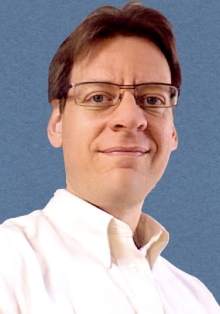
Title: Professional Development Opportunities Within JALT Publications
Date/Time/Place: Tuesday, March 16th, Kochi Women’s University (Meeting Room 2) 7:00-8:00 p.m
Abstract:
This presentation will focus on professional development opportunities within JALT Publications. Advice for getting published (Including submissions guidelines and editorial processes) will be provided, and benefits from becoming a volunteer staff member will be outlined.
Speaker profile:
Jerry Talandis Jr. teaches English at the Chiba campus of Toyo Gakuen University. He is currently a co-editor of JALT’s The Language Teacher. His research interests include professional development and exploring online tools for language learning.
Anatomy of a Native Check
Reply
Date and time: Saturday, Feb 20 (1:00-2:30)
Place: Kagawa University Education Faculty, Room 411
Presentation title:Anatomy of a Native Check
Abstract
Many academic journals in Japan require “native checks” for English abstracts accompanying submissions in Japanese. However, the efficacy of such native checks has not been confirmed empirically. It has even been suggested that native checks done by English teachers on texts produced by scientists may be superficial at best, and harmful at worst, particularly in terms of lexical cohsion. The presenters, an English teacher and a Nursing instructor, will describe an ongoing study that centers on the nature and efficacy of native checks. Ten native English speakers were asked to edit an abstract produced by a Japanese nursing researcher, and the changes made were identified and categorized from a socio-cognitive perspective. Follow-up interviews were then conducted. Results reveal a variety of approaches and attitudes towards editing, suggesting that a simple native check is in fact a complicated phenomenon yielding diverse results.
Presenters
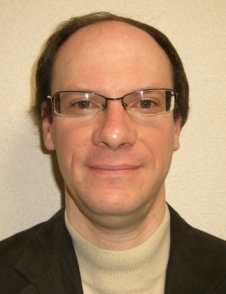
Ian Willey, Center for Research and Educational Development in Higher Education, Kagawa University
Willey teaches English as an assistant professor at Kagawa University and is a doctoral candidate at Hiroshima City University, focusing on second language writing.

Kimie Tanimoto, School of Nursing, Kagawa University
Tanimoto is an associate professor and pediatrics nursing instructor at Kagawa University. She is also a doctoral student in the Graduate School of Medicine at Kagawa University.
East Shikoku JALT event on technologies in education
Event Date: Sunday, Jan. 24, 2010
Time: 13:00 – 15:00
Location: Kochi University of Technology, Tosayamada, Kochi, Japan
(3rd floor of K-building, located on the east side of campus, near the student cafeteria)
Map: https://esjalt.org/eastshikoku/archives/2010/01/east_shikoku_ja_4.html#more
Event Description
This event will feature a number of educational technology professionals from the Shikoku region and will include both hands-on workshops and digital poster sessions.
Workshop titles and poster sessions
1:00-1:40: Workshop 1: Multimedia content creation tools for language teaching
Presenter: Paul Daniels
Abstract: An important component of language learning is visual and audio input, particularly at limited language proficiency levels. Multimedia can greatly enhance learner understanding of the language content. This practical workshop will introduce basic tools that can be used to create and deliver images, audio and video for language instruction. The following topics will be covered in this workshop. Depending on the number and level of computer proficiency of the participants, this workshop may be divided into two groups.
• Recording and embedding media into online content.
• Adding multimedia to online quizzes and language practice activities
• Using PowerPoint as an content creation tool rather than a presentation tool
• Creating instructional content with Camtasia Studio
• Web-based multimedia media creation & delivery tools
1:40-2:20 Workshop 2: Introducing Low Intermediate Students to Collocations using Google Search
Presenter: Professor Trudie Heiman, Tokushima Bunri University
Abstract: This workshop will demonstrate how to use Google Search to introduce Low Intermediate Level learners to Collocations. Understanding and using collocations can significantly improve students writing and help move the L2 learner toward more native- like fluency. A brief introduction to collocations and detailed demonstrations on how to introduce collocations will be given. Before and after samples of student work will be provided to illustrate how understanding collocations improve their ability to use words correctly and appropriately.
2:20-3:00 Poster sessions
Poster 1: The Lexical Portfolio
Presenter: Professor Trudie Heiman, Tokushima Bunri University
Poster 2: Applying Moodle’s Survey and Quiz Functions to the Classroom
Presenter: Andrew Oberg
Poster 3: Can the listening experience be enhanced through use of visual referencing?
Presenter: Michael Sharpe
Poster 4: Designing iPhone or iTouch apps for language instruction
Presenter: Paul Daniels
Poster 5: Ideas and Resources for English Teachers Using iPod Touch
Presenter: David Grant

